
About
A hunter who wanted the book kept properly
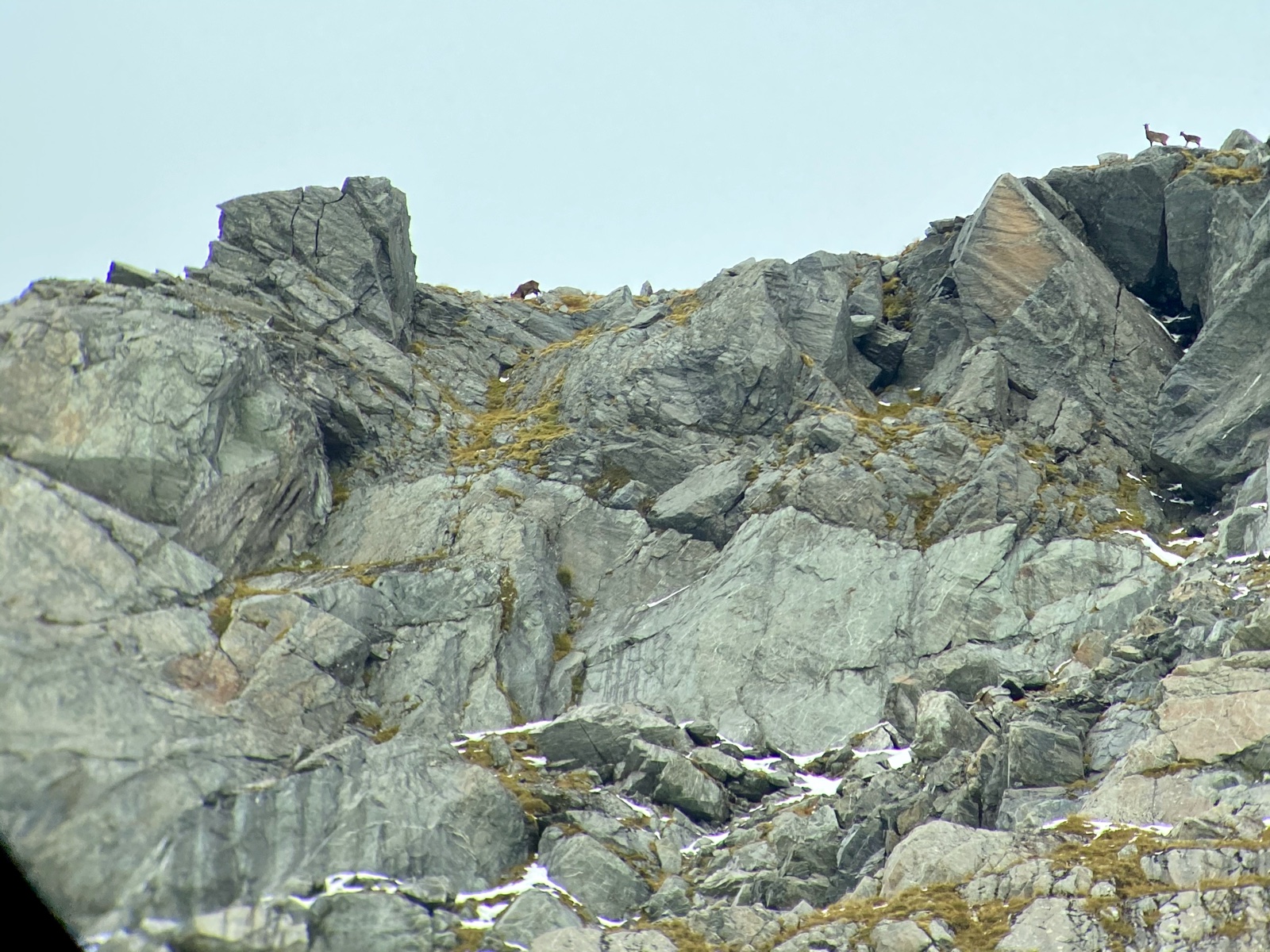
photos/originals/tahr-on-the-face.jpg
I hunt and fish the South Island of New Zealand, and I also write software, which is a dangerous combination if you keep noticing the same missing thing.
The problem this app solves
I had years of photographs and no idea how many hours were behind any of them. I could not tell you whether Willy's Gully had actually been better than Creamcan or whether I just liked walking up it. The good days were all I had written down, so the only thing my record could prove was that I sometimes got a deer.
That is what a camera roll is: a highlight reel, in date order, with nothing at all from the days you came home empty. And a highlight reel cannot be divided by anything. The hunting logs on the App Store are mostly built for the American market and built around the harvest — enter the animal, enter the score — so a day with no animal has nowhere to go, and it goes nowhere. Several of them sell "AI predictions" on top, without ever saying how much data sits behind a claim.
So the blank days are the feature. An outing is the unit here, not an animal. It has a start, a finish, a place and a list of what happened — which is sometimes nothing. Once the hours are in the book a count becomes a rate, and a rate can be compared. Everything else in the app follows from making a blank day cheap enough to log — two taps — and then refusing to hide it anywhere afterwards.
Why it is built the way it is
One rule sits above every other in this app: never imply data that was not recorded. It is the same rule HuntFix has about precision, applied to a record instead of a measurement.
A logging app with an AI bolted to it is a machine for breaking that rule. From four data points it is trivially easy to produce "deer are most active two hours before sunset", and it will feel authoritative and be worthless. So the rule is enforced in the arithmetic rather than promised in the marketing. Every figure carries its count, its hours and its outings. A cell with fewer than three outings behind it is greyed and labelled too few to compare. Seen and taken are never added together. Unknown is a dash, never a zero. There is no trend line, no forecast, and the word "best" does not appear anywhere in the app or in anything the AI is allowed to say.
That sounds like modesty and it is not. After a season of your own numbers you are far better placed to judge your own country than an app with eleven rows in a table, and an app that pretended otherwise would be lying to you in the one place you were relying on it to be straight.
Two more rules follow from the first. A live outing is never interrupted — nothing in the field flow waits for the network or a purchase, and an outing that is already running is never cut off by anything. And the record belongs to you: you can read it and export it whatever you have or have not paid, it is backed up to your own iCloud and not to me, and nothing leaves the phone unless you choose it.
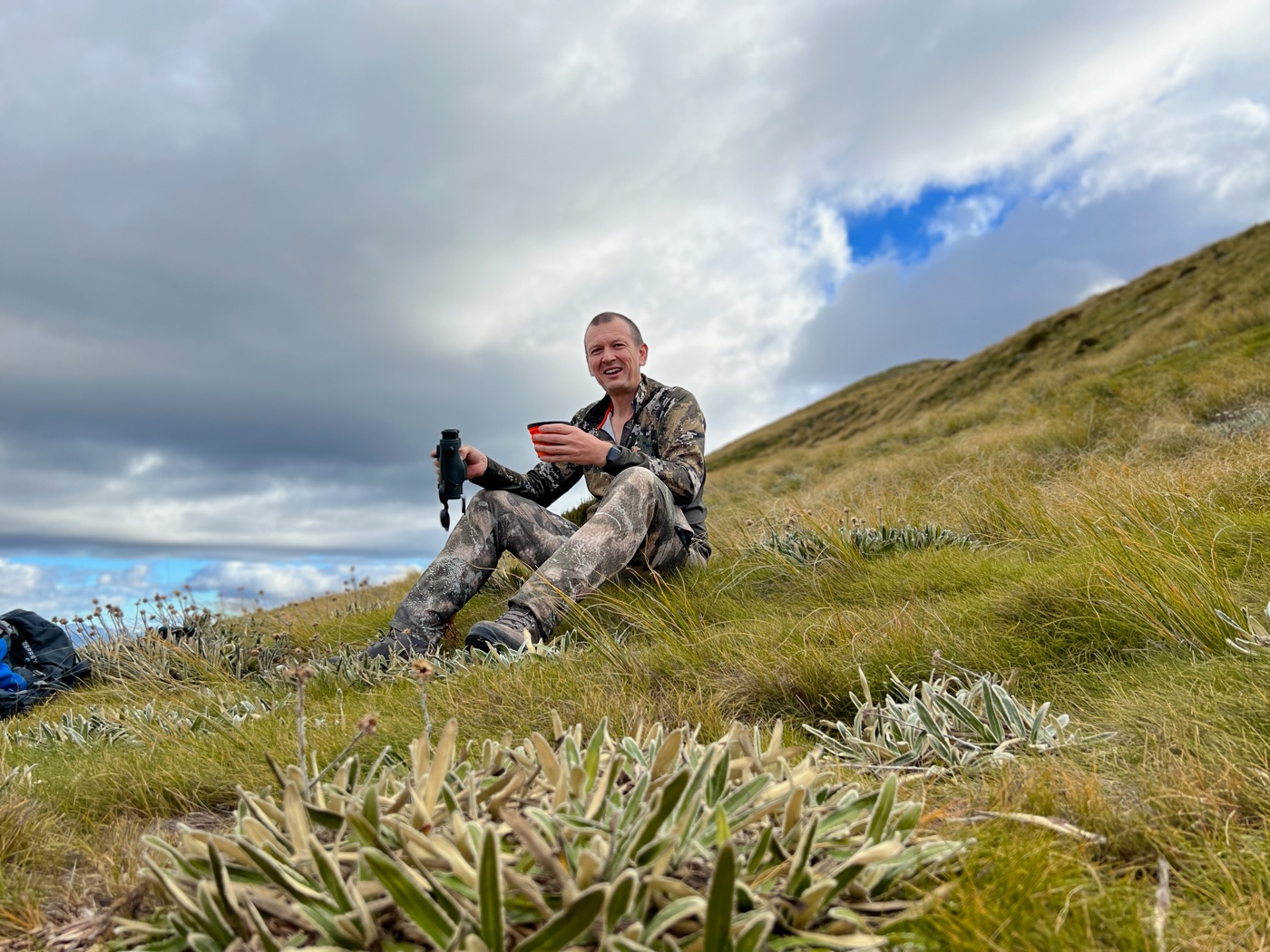
photos/originals/glassing.jpg
New Zealand first
Built for me, sold to New Zealand hunters and anglers, usable anywhere. The species list that ships is the New Zealand one, complete — red deer, fallow, sika, wapiti, tahr, chamois, pigs and goats; the ducks and geese; the trout and salmon; snapper through to crayfish — with the sex terms each species actually uses, and any species you add in the field is as good as one that shipped. Australia, the United States, Canada and the United Kingdom get their own words, so a Montana or a Yorkshire hunter should feel the app is theirs; their species lists are still to come.
What it will never carry is the law. No seasons, no bag limits, no licence requirements, no permit reminders. Those things differ by region and change without notice, and an app that is wrong about one of them is worse than an app that never mentioned them. Knowing the rules where you are is yours.
The other app
HuntFix Journal is the companion to HuntFix, which is the other half of the same problem. HuntFix is about one tense hour: you watched an animal drop on the far face, and you need to get to that exact spot. The Journal is about the season around it: what you saw, what you took, how many hours it cost, and what that adds up to.
They share a name, a design language, this website and the same habit of saying "—" rather than inventing a number. They share nothing else. Separate app, separate price, separate record; owning one gives you nothing in the other, and neither needs the other to be useful. Once both have shipped, a recovered animal in HuntFix will get a one-way Log this harvest button that hands the entry across for you to confirm here. That is the whole of the connection.
About me
I am Scott. I am not a software company — I am a hunter who wanted the book kept properly, and who writes software.
I built it for my own record first. Every decision in it is one I made as the person who would be standing in a maimai at six in the morning with cold hands, or sitting at the table in April wanting a straight answer about my own year. It might be useful to you too.
What you will not find here is a download button, or a claim that it has been tested in the field. It has not. The app is written and it runs; the maths has been checked against the Naval Observatory's almanac and the backup has been proved to round-trip without losing a photograph. But it has not yet spent a morning on a hill, and until it has, this site says so rather than pretending otherwise. When it is on the store, these pages will say that instead.
The short version
Outings + entries + conditions = an honest record. Effort ÷ outcome = a rate. Everything else in HuntFix Journal exists to keep that record cheap to write and impossible to flatter.