
About
A hunter who got tired of the search
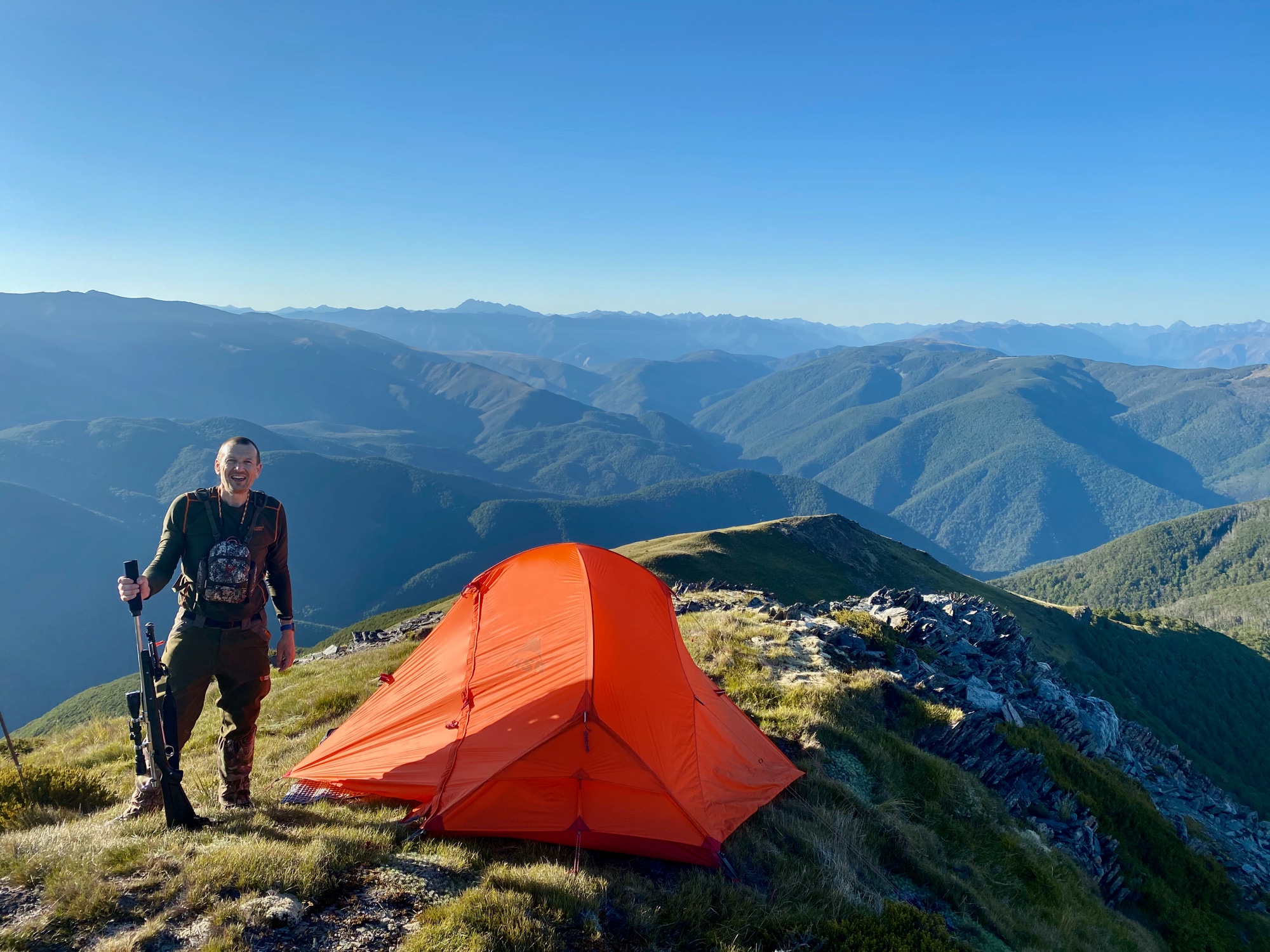
photos/originals/ridge-camp-wide.jpg
I have hunted since I was a boy, and I live in the South Island of New Zealand — a place where red deer, fallow deer, Himalayan tahr, chamois, pigs and goats all run free on public land, and where a day's hunting can put you on one side of a valley looking at an animal on the other.
The problem this app solves
You spot an animal on a distant ridge. You settle in, range it, take the shot, and the animal drops.
Then you stand up — and everything changes. You leave your shooting position, drop several hundred metres into the valley floor, cross the creek, and climb the far face. By the time you get up there, the ridge you were looking at across open air is a slope of tussock and scrub that all looks the same, and the spot you were so sure of is nowhere to be found. I have spent a long time on those faces, grid-searching country I could have pointed at an hour earlier.
It is not carelessness. From across a valley you are seeing a picture, not a place: the animal fixed against a scree fan, a patch of scrub, the bluff above. Move, and the picture rearranges. The scree fan is behind you, the bluff is under your feet, and the stepped face you studied is now one uniform slope. You climb into it knowing you are close, with no way to say what close means.
And the clock is running. Light goes, weather comes in, and an animal you cannot find in the first hour you may not find at all. A wasted animal is the thing every hunter I know dreads.
HuntFix fixes the position while you can still see it. Point the phone at the animal, lock the bearing and angle, type in the range, and it works out where the animal is — latitude, longitude and elevation — and walks you to it, whatever route the country forces on you.

photos/originals/with-an-animal.jpg
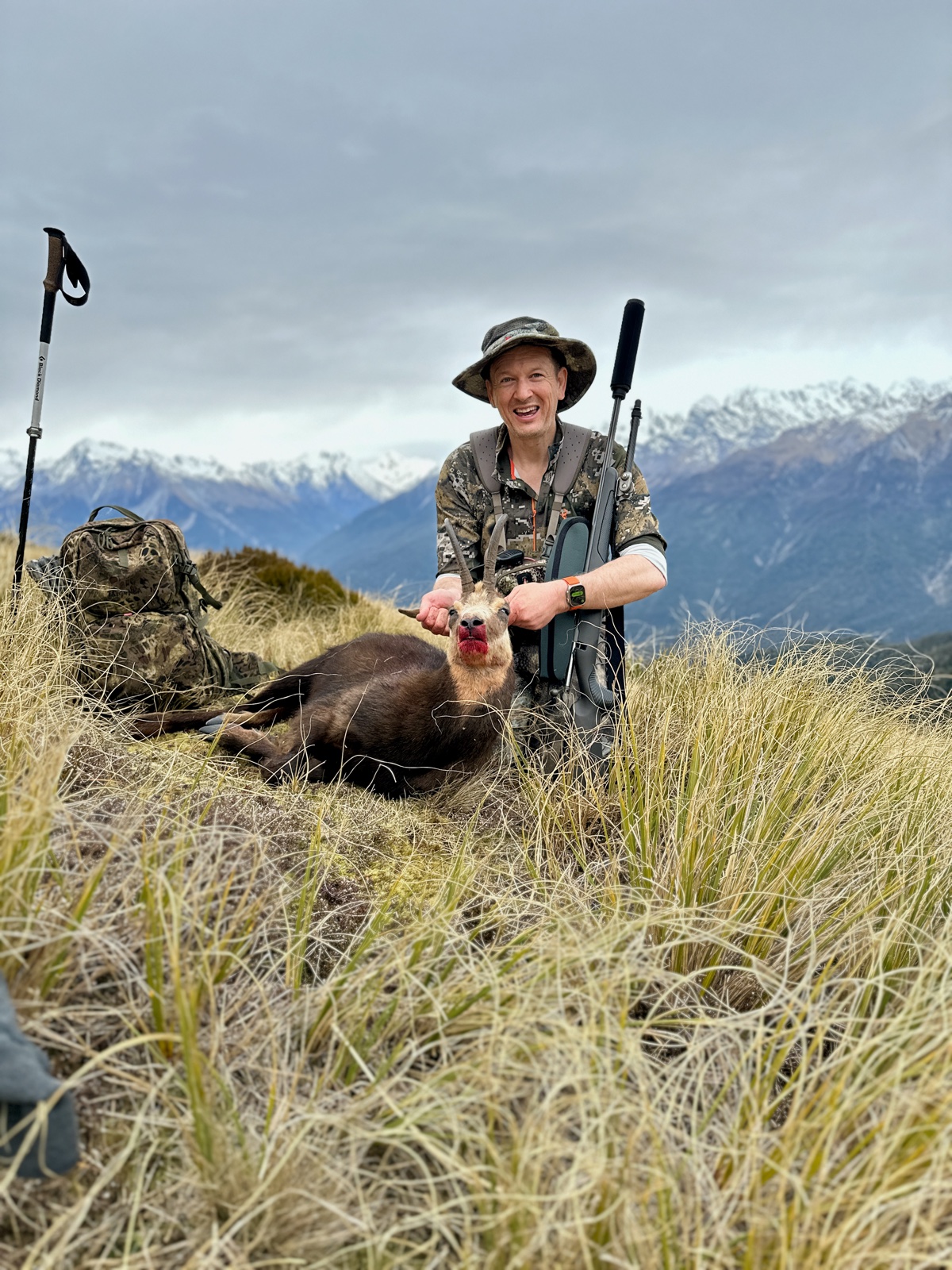
photos/originals/chamois.jpg
Where the idea came from
Years ago I carried a Garmin handheld with a feature called Sight 'N Go. You pointed the unit at something in the distance, locked the bearing, and it would walk you out along that line. It was a good idea and I used it a lot.
But a bearing on its own is only half the answer. It tells you which way, never how far — so it can put you on the right line and still leave you searching along it. Down in the valley the line is fine. Coming up the far side you are on the correct bearing with two hundred metres of face above you and two hundred below, and no way of knowing which part of it to look at.
Meanwhile the rangefinder in my other hand had the missing number the whole time, with nowhere to put it. You read 487 metres, walk away, and the number stops meaning anything, because it was only true from where you stood.
I do not carry a GPS any more; the iPhone is a better instrument for this than the handheld ever was. It knows where I am standing, which way it is pointing and at what angle, steady to a fraction of a degree, and it has a camera so I can see what I am aiming at. Add the rangefinder's number and it can put a pin on the animal instead of a line towards it.
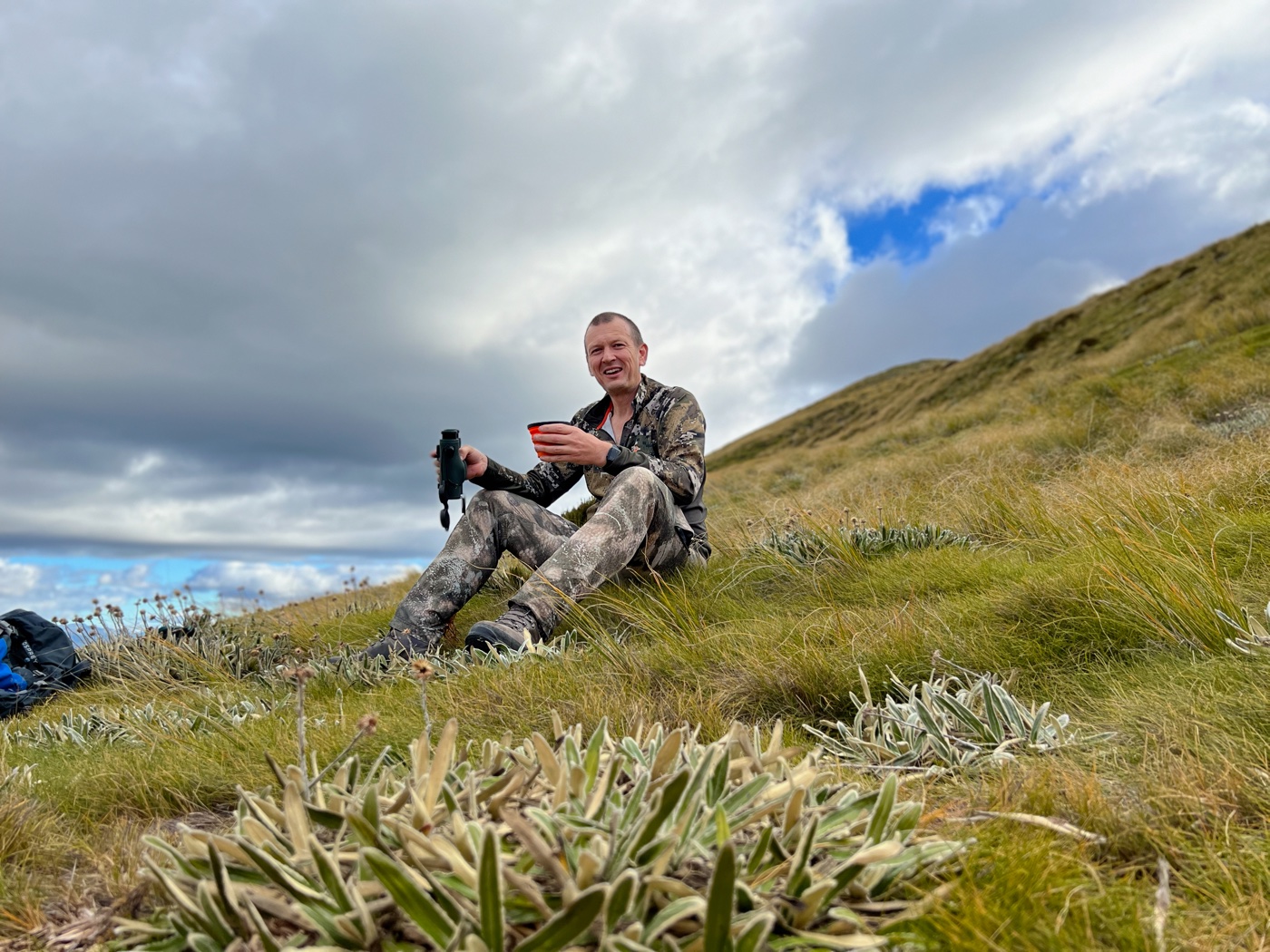
photos/originals/glassing.jpg
Why it is built the way it is
One rule sits above every other in this app: never imply precision that was not measured.
A GPS fix has error in it. A compass has more. Every target HuntFix creates therefore carries its own uncertainty, and the app shows you the size of the area you should expect to search rather than a false pinpoint. If the phone does not know a value — an elevation it could not read, a bearing the compass could not trust — it shows a dash and says so. It will never quietly show you a zero and let you believe it was a measurement.
That is not modesty; it is the difference between useful and dangerous. Told "the animal is here", a hunter searches a circle three metres across, finds nothing, and decides the app is broken. Told "somewhere in this ellipse, wider across your line of sight than along it", they search the right shape of ground first. The uncertainty is not a disclaimer. It is the instruction.
The same thinking shaped the rest. Nothing interrupts a live recovery — no dialog, no price, nothing that waits on a network — from MARK TARGET until you are standing over the animal. The numbers are the primary display and the map is allowed to be blank, because reception in a New Zealand valley is a coin toss. And what was measured is never edited: drag the pin and your decision is stored beside the calculation, not over it.
It goes to your iCloud, and nowhere I can read it
There is no account, no tracking, and no server of mine. Your targets, your photographs and your positions are yours.
Where you hunt is the thing hunters are most careful about telling each other, let alone a company. So there is no server of mine for it to go to, and there never has been.
For a while the app backed nothing up at all. Then I thought about losing a phone with a season's recoveries on it. HuntFix now backs your targets up to your iCloud — your Apple Account, your storage. A developer can see the shape of that data and none of its contents, so I cannot read a record of yours. A switch in Settings turns it off, and a button deletes the iCloud copy.
I would rather say the narrow true thing than the broad comfortable one. The promise is not that nothing leaves your phone. It is that nothing reaches me.
photos/originals/mac.jpg
About me
I am Scott. I am not a software company — I am a hunter who got tired of the search, and who writes software.
I built HuntFix for myself — the tool I wanted in my own pocket, shaped by the animals I could not find. It has helped me find my own downed animals, which is exactly what I built it to do, and it is on the App Store for one reason: if it is useful to me, it might be useful to you too.
You will not find an accuracy figure here. The maths has been tested hard against published survey baselines and the app has done its job on real hunts, but turning it worked for me into a number means measuring the miss at known positions on a real face, and that is still to do. When it is done the numbers go here, whether they flatter the app or not.
If it saves you a walk you did not need to make, it has done its job.
The short version
Position + bearing + angle + range = target. Everything else in HuntFix exists to serve that one calculation, or to tell you honestly how much to trust it.